
The First Lessons in Learning to Paint: Masses and Shadows
When you stand in front of a blank canvas, one of the first things you want to do is pick up a brush and start mixing up some colors. But in most academic art programs, you spend very little time mixing colors in the beginning. Instead, you learn how to see light and shadow. It’s an important idea to understand that the first lesson in painting isn’t really about color. There are two important rules to keep in mind for the first lesson in painting: Masses, and Shadows.
So how do we paint light and shadow? Well, take a cup or a small statue and place it on a table in front of a window. As the light falls on the object, you’ll see that it breaks up into areas of light, dark, and middle value. When I say middle value, I’m talking about the areas that fall between the light and the dark. Notice how the areas of light and dark have distinct edges, or boundaries. The easiest way to see this is to notice where the light starts and where the shadow starts. Learning to see these transitions is the very first lesson in painting.
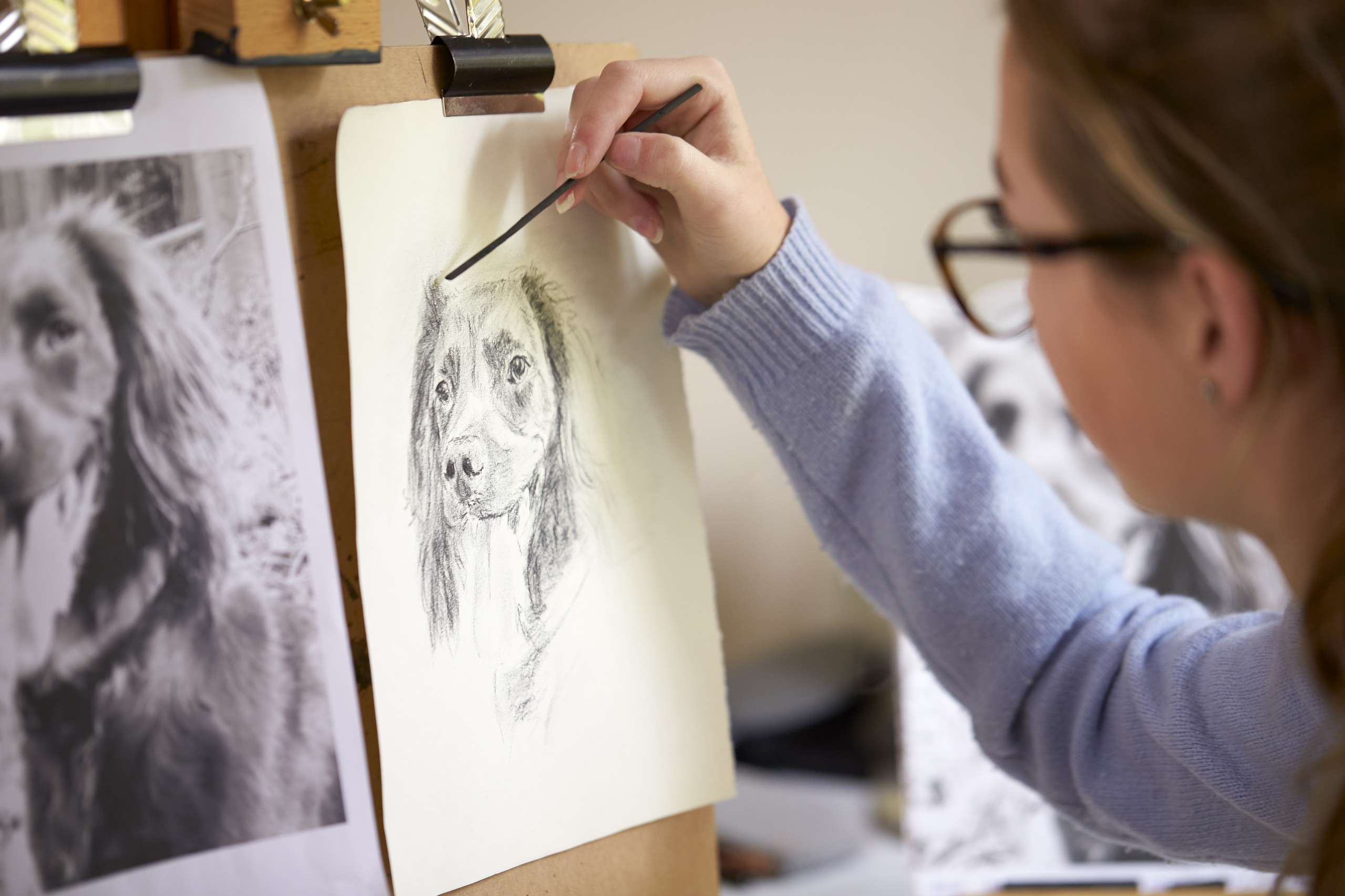
The biggest problem with most beginning paintings is that they try to do too much. We see color, texture, highlight, and edge all competing for attention. The solution to this is to start by painting large tonal shapes. Before you paint, take a few minutes to draw your object with a soft pencil, and then fill in the largest shadow area with one tone. Don’t worry about the smaller highlights or edges for now. You’re just trying to get a feel for the mass of the object. This takes some time to do, but the sooner you learn how to see objects as simple masses, the better.
A lot of mistakes happen when we begin to shade. We often push too hard on the pencil or apply too many strokes as we try to create contrast in our drawing. This usually results in a flat image that’s hard to correct. In an academically painted drawing or painting, you never really see pure blacks. Even the darkest shadows will always show some gradation. Instead of trying to force contrast early on, try to build your tones gradually. Apply lighter strokes and gradually build the tones deeper as you compare them to the lightest light on the object. If your drawing begins to look too dark, stop and try to lighten a few areas with an eraser to push the drawing back into balance.
One of the best ways to practice this is to dedicate a short time each day to drawing an object. Place a single object on a table in front of a window and spend five minutes just looking at it and trying to see where the light and shadow lie. Take note of where the shadow ends and where the light begins. Then spend ten minutes drawing the object and filling in the largest shadow with a soft tone. Finally, spend a few minutes just correcting two or three transitions from light to shadow. If you limit the time you spend on the drawing, you’ll be less likely to overwork it.
The more you do this, the better your eyes will become at judging the roundness of an object and how the shadows should be Gradated. Once you get this down, color will become much easier because you’ll already have a fully realized form. One of the main reasons paintings fail is because the form wasn’t realized first. If you strengthen your ability to paint form and value, you’ll see improvement across the board in your paintings.