
Observing Value Relationships in Academic Painting
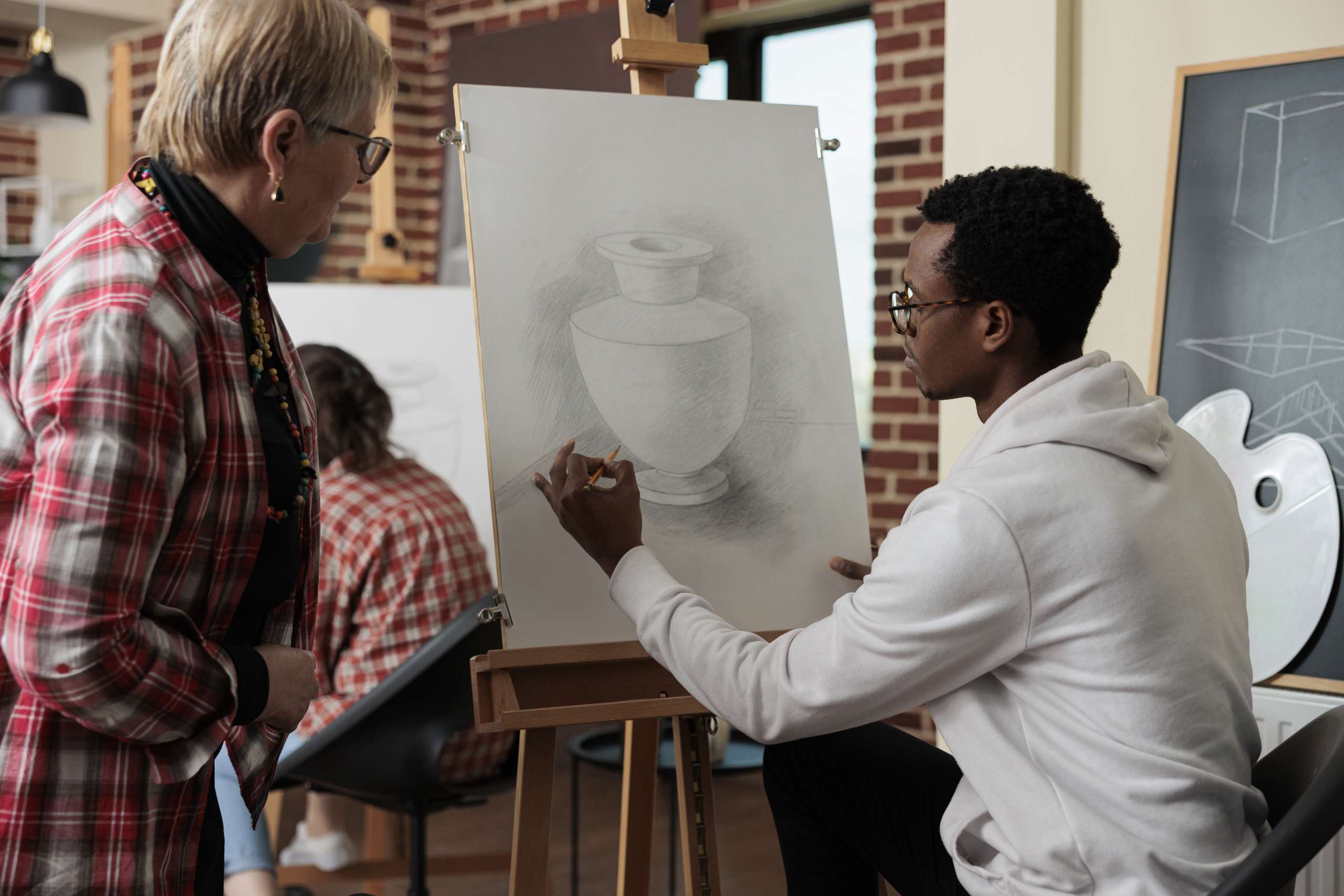
The novice painter might think that accuracy in painting is a matter of steady nerves, but the truth is that the ability to compare is the fundamental skill. Academic painting is concerned with observing the relative value of one area compared with another. A highlight is bright only relative to something else that is darker; a shadow is dark only because it is next to something lighter. To learn to observe relative values changes the nature of looking. The eye is no longer fixed on a single point on the model, but roves back and forth, making comparisons of differences that create the illusion of form.
A practical exercise might start with a still life object or cast set up before a fixed light source. A sphere or fruit make good practice subjects. Observe the lightest light on the object and the darkest shadow. Before mixing a single color, take a moment to decide which of those two extremes is the most extreme. When you do start to set up colors on the palette and put paint to canvas, mass in the darkest shadow, but with a color that is not as dark as you can make it. Leave some headroom to refine the value in subsequent steps, and thus maintain flexibility in the painting. As you work on subsequent colors and values, compare each one with the first shadow you established, asking yourself if it should be a little darker or a little lighter.
One of the most common errors is to begin painting by observation, but then continue painting from memory without looking at the model. After a few minutes of work, the brush keeps moving but the eye stops observing. The result is a painting with shadows that are too dark and highlights that are too light. The solution is straight-forward but necessary: Every so often, step back from your easel and view your work at arm’s length. Compare what you see with the model and you will maintain the balance of your painting and avoid letting your darks and lights get away from you.
It is useful to practice a regular exercise in comparing light and dark. Take 5 minutes to observe the object and identify the lightest light, a mid-tone and the darkest shadow. Take the next 10 minutes to paint just those three values without adding any gradations in between. The next day, practice the same exercise, but add just one value between the light and the dark. Practicing in this way trains you to observe relationships rather than inventing values. As you work in this way, you will find that your painting will slow down, but in a good way. You will make fewer brushstrokes, and each one will be more considered because it will be made in relation to something else already on the canvas.
Light will no longer appear haphazard and accidental, but will instead emerge out of comparison. As your eye becomes more attuned to observing relationships, even the most mundane still life objects will begin to appear solid and three-dimensional and the surface of your painting will begin to evoke a sense of space.