

Controlling Edges: The Quiet Skill That Makes Paintings Feel Real
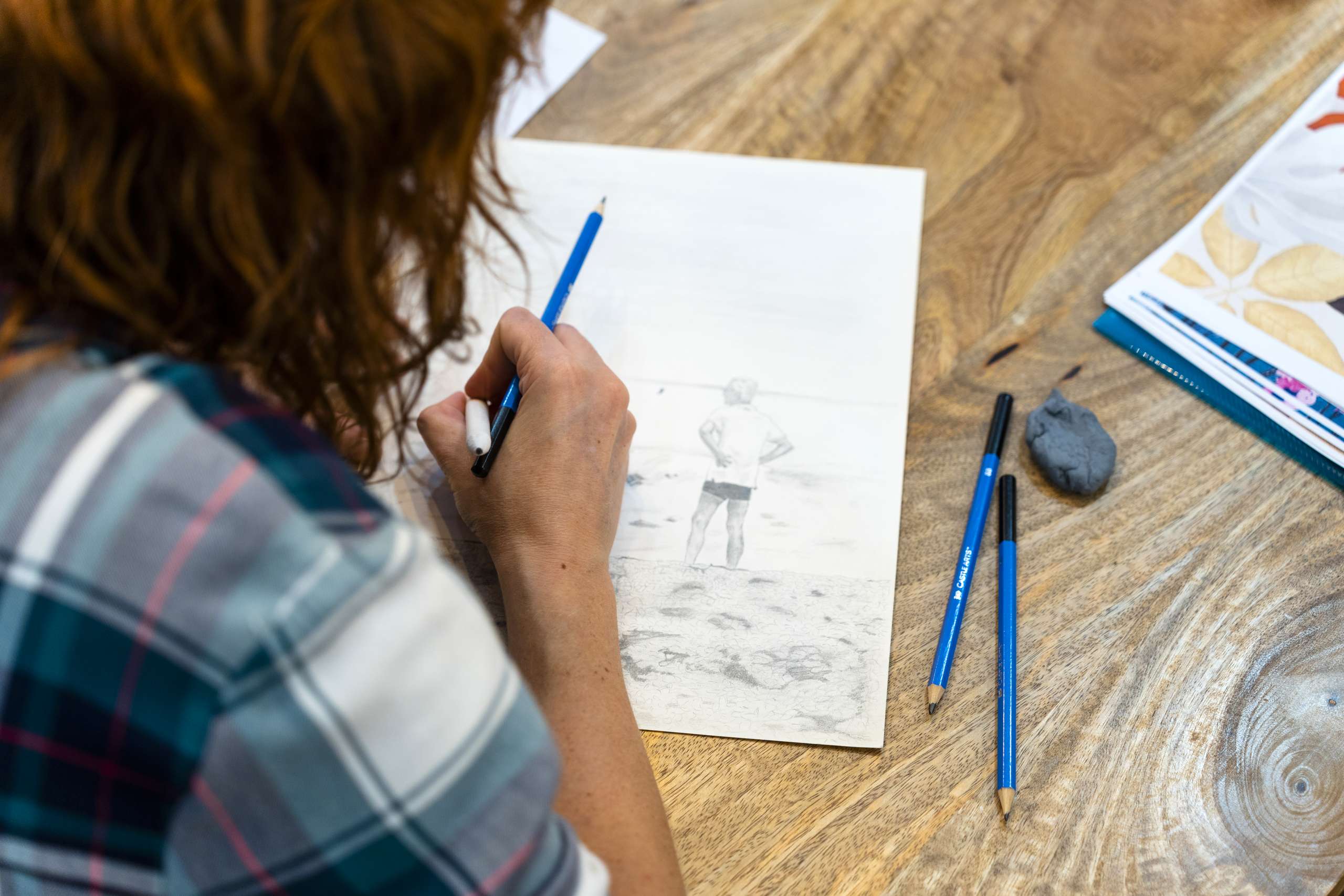
THE TREATMENT OF EDGES in a painting is one of the most important ways to achieve a believable and realistic image. In this context, edges refer to any boundary between two shapes of differing value. Not all edges are created equal, however, and there are certain types of edges that must be used in specific circumstances to achieve the desired effect. To ignore this is to invite an image to appear cartoonlike and flat. Learning edge control is one of the best skills you can develop, and it has more to do with just learning to see than it does with mastering any particular technique.
Look at the still-life setup, where the cup is sitting in front of the box. As a general rule, the side of an object that is getting the most light will exhibit a harder edge than the side that is in shadow. This is how we perceive the three-dimensional world around us. Go ahead and make a quick sketch of the still-life setup. As you sketch, make sure to draw the entire outline of both objects lightly. Choose a couple of places where you can soften the edge (with a blending stump for a graphite drawing or a brush for a painting). Watch how much more believably three-dimensional the object becomes.
In a painting, all edges are not created equal. A common mistake made by beginning students is to make all of the edges the same hardness or softness. Many times, this is done with the best of intentions. It is easy to get caught up in the act of defining and sharpening edges. Making those edges sharp is fun and rewarding. Unfortunately, if all the edges are sharpened, the object will not be able to exist believably in the atmosphere. Instead of sharpening all of the edges, choose one edge to sharpen and allow the rest of the edges to remain soft. This will help the viewer see what is important and direct his or her attention to that part of the painting. Wherever you place a hard edge is where the viewer will look.
One of the best studies you can do to help yourself learn to control edges is a fifteen-minute study done every day. Choose one object and place it under a consistent light source. For the first three to five minutes of your study, observe where the hardest edge is. Observe where the edge starts to soften. In the last ten minutes of your study, make a quick sketch or painting of the object, paying close attention to the edge. Allow one edge to remain sharp and hard, while the rest of the edge softens and disappears into the background. Don’t worry about highlights or texture; just work on edge control.
As you get better at controlling your edges, it will begin to affect the way you paint in general. The objects will appear more three-dimensional, the backgrounds will recede, and the overall image will be more believable. This simple exercise will teach you to see more accurately and will help you develop a sense of restraint in your painting. Resist the temptation to sharpen all of your edges. Instead, learn to let the viewer’s eye move through the painting by using soft edges.